






TWO SANCTUARIES ABOVE TOKYO: 1 HOTEL TOKYO & FUFU TOKYO GINZA
Restorative stays in Japan are often associated with a departure: a train out of the city, toward mountains, coast, or a hot spring valley. Two hotels that opened recently in Tokyo suggest a different direction. Instead of traveling out, they go up: far enough above the street that the city becomes a view rather than a surrounding, and its noise recedes. Each builds its sanctuary on a contrasting principle. 1 Hotel Tokyo makes a central hub of its open, plant-filled floor, 38 stories up. FUFU Tokyo Ginza divides itself into 34 self-contained rooms, each with its own garden and hot spring bath.


November 2026
01. 1 Hotel Tokyo
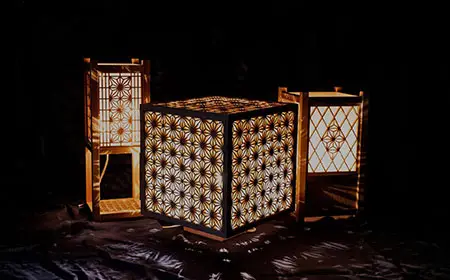
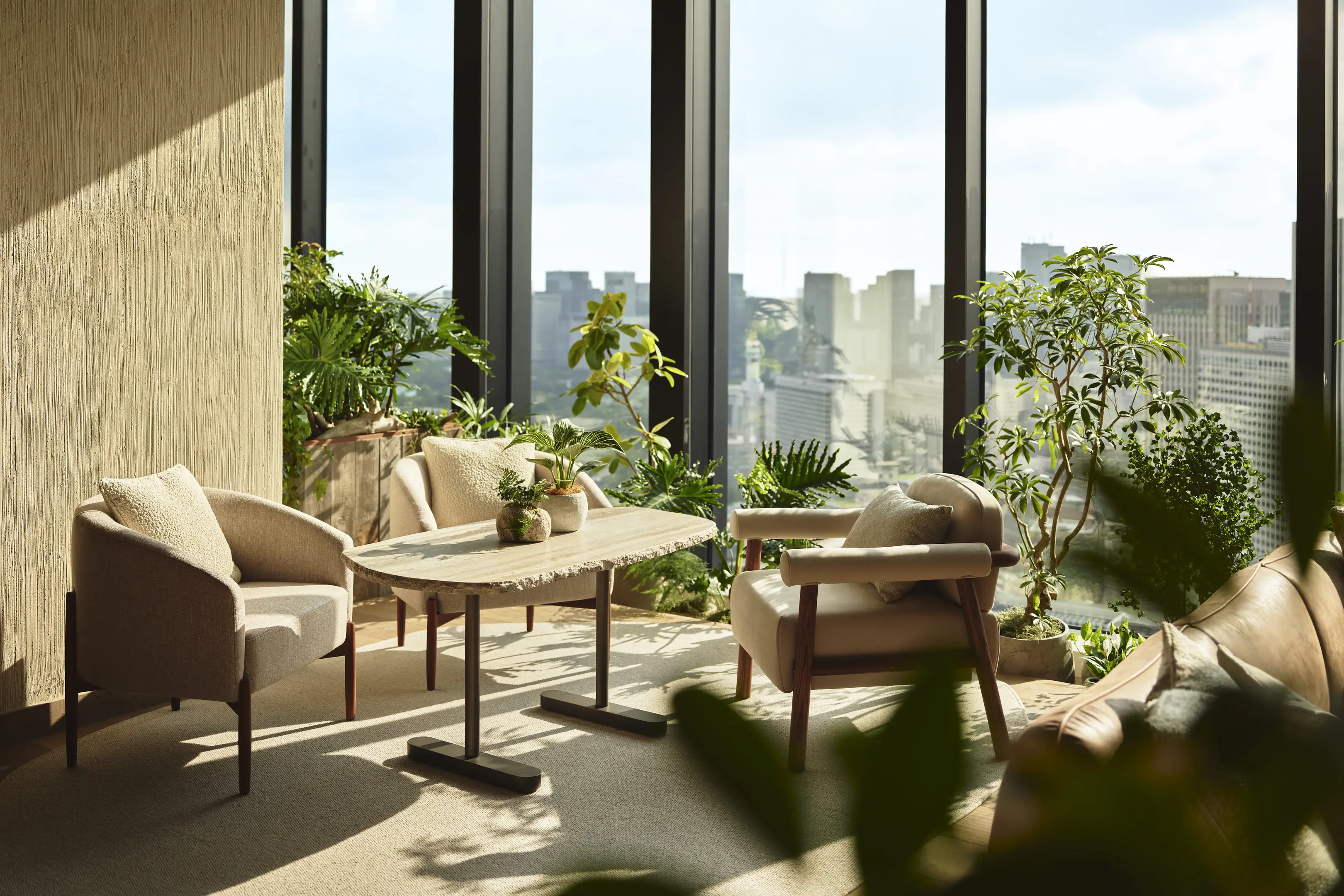
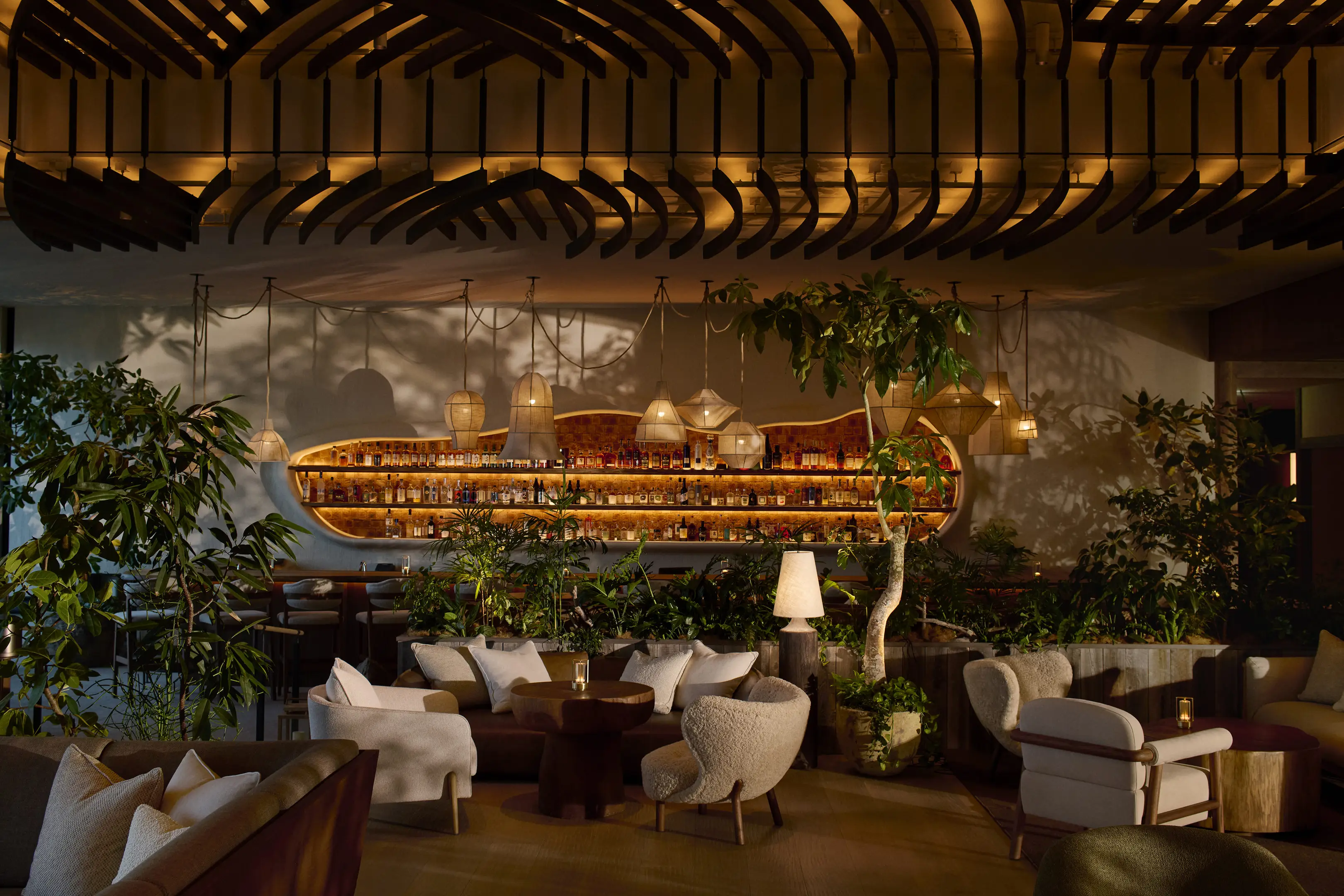
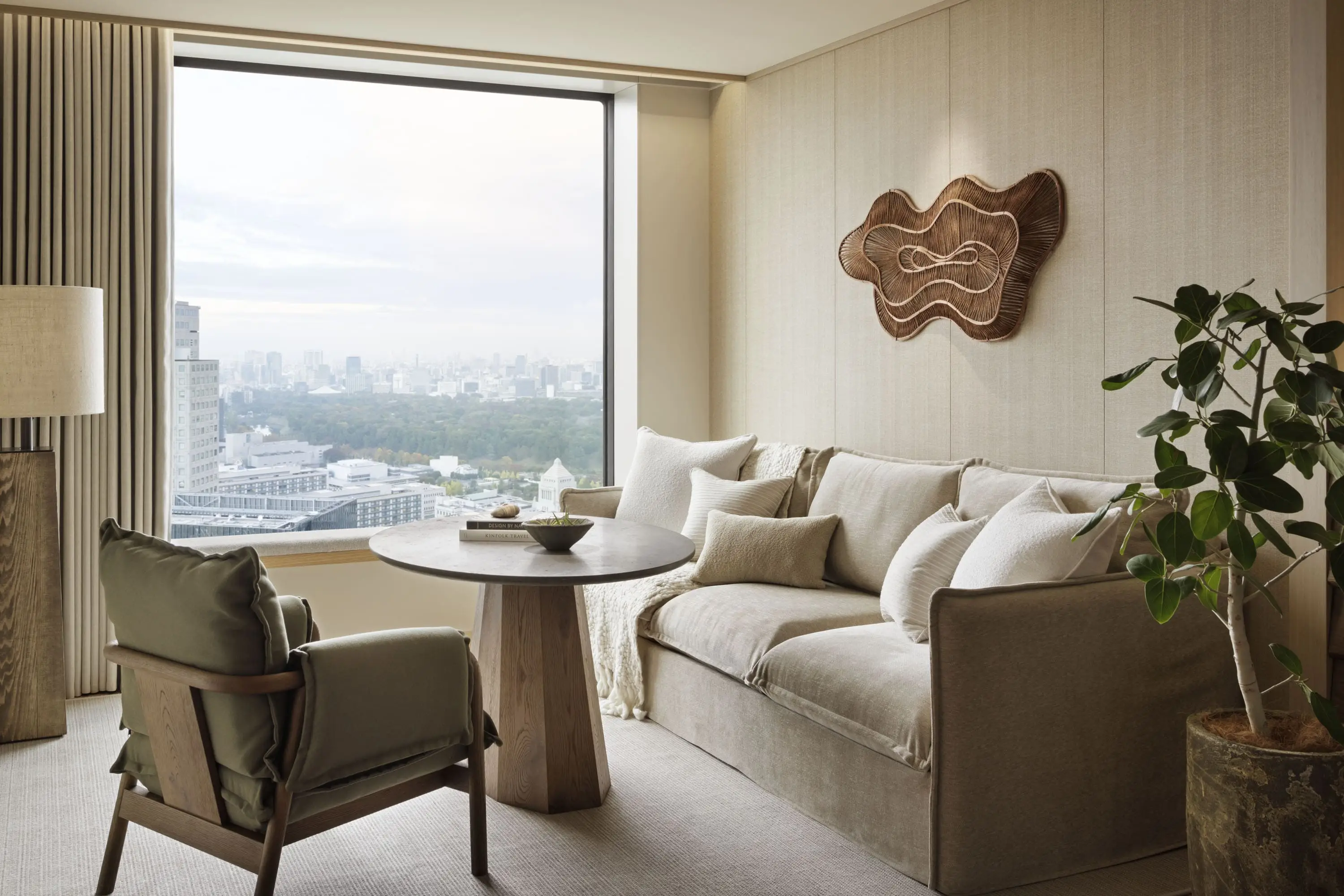
The transition begins at street level, with a wall of greenery at the base of the Akasaka Trust Tower, and continues by elevator to the 38th floor. The brand calls the sequence "Street to Canopy." The doors open onto full-height windows offering sweeping views of the Imperial Palace gardens, Tokyo Tower, and the surrounding cityscape, beneath a sculptural beamed ceiling hung with hand-stitched lanterns.
Opened in March 2026, spanning the 38th to 43rd floors, this is the first property in Japan for the brand that blends sustainable luxury with biophilic design. Its defining decision is visible on arrival: reception, the grab-and-go Neighbors Café, the restaurant NiNi, the gin bar Spotted Stone, the Bamford Wellness Spa, the gym, the pool, and the event rooms all share one level. Consolidation cuts the energy needed to run them and makes encounters between guests natural, so the floor reads as a shared living room rather than a lobby. Some 1,500 living plants are distributed through the property, with more than 300 of them on the 38th floor, tended daily. None are artificial, and since the tower's windows do not open, they shape the air.
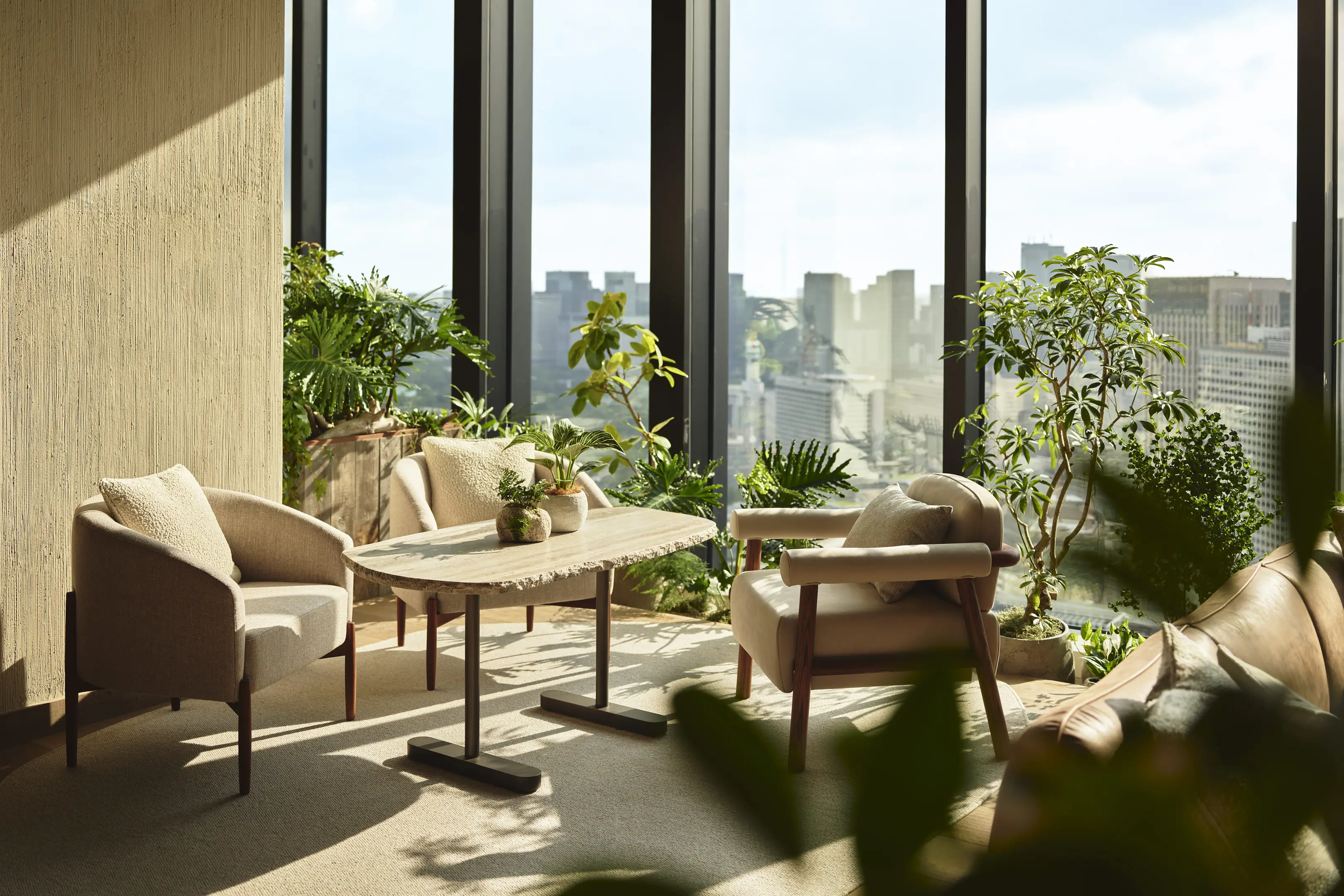
Interiors are by CRÈME, the Brooklyn studio led by Japanese architect Jun Aizaki, and the materials are what separate this property from its sister hotels abroad. Oya stone, a soft volcanic stone quarried in Tochigi Prefecture, lines the entrance and the 38th-floor elevator hall. The reception desk is built from reclaimed timber, left rough rather than polished smooth to reflect the imperfect beauty of wabi-sabi. Guest-room artworks set preserved moss into boards salvaged from this building's own construction scaffolding. The ceiling's ridged form recalls the raked gravel of a Japanese garden, though the designer describes it as a pattern of moving air. The cloud-shaped back bar at Spotted Stone, holding close to 100 Japanese craft gins, follows the same idea, shaped to appear to float.
1 Hotel Tokyo's philosophy comes through most clearly in small objects, each one inviting the guest to slow down. An hourglass in every shower runs out in about 5 minutes, asking nothing when the sand runs out. A smooth stone on an outside shelf replaces the do-not-disturb switch. Recycled hangers carry labels describing their past lives, among them a love letter and a thank-you card. The numerous events held each month are announced on handwritten blackboards. Nothing here hurries a guest toward anything: there is nothing to complete and nowhere else to be. The evidence is behavioral. Guests linger on the 38th floor longer than expected, and even visitors settle in for 2 or 3 hours at the café. This is a retreat built around a shared floor, not a closed door.
02. FUFU Tokyo Ginza
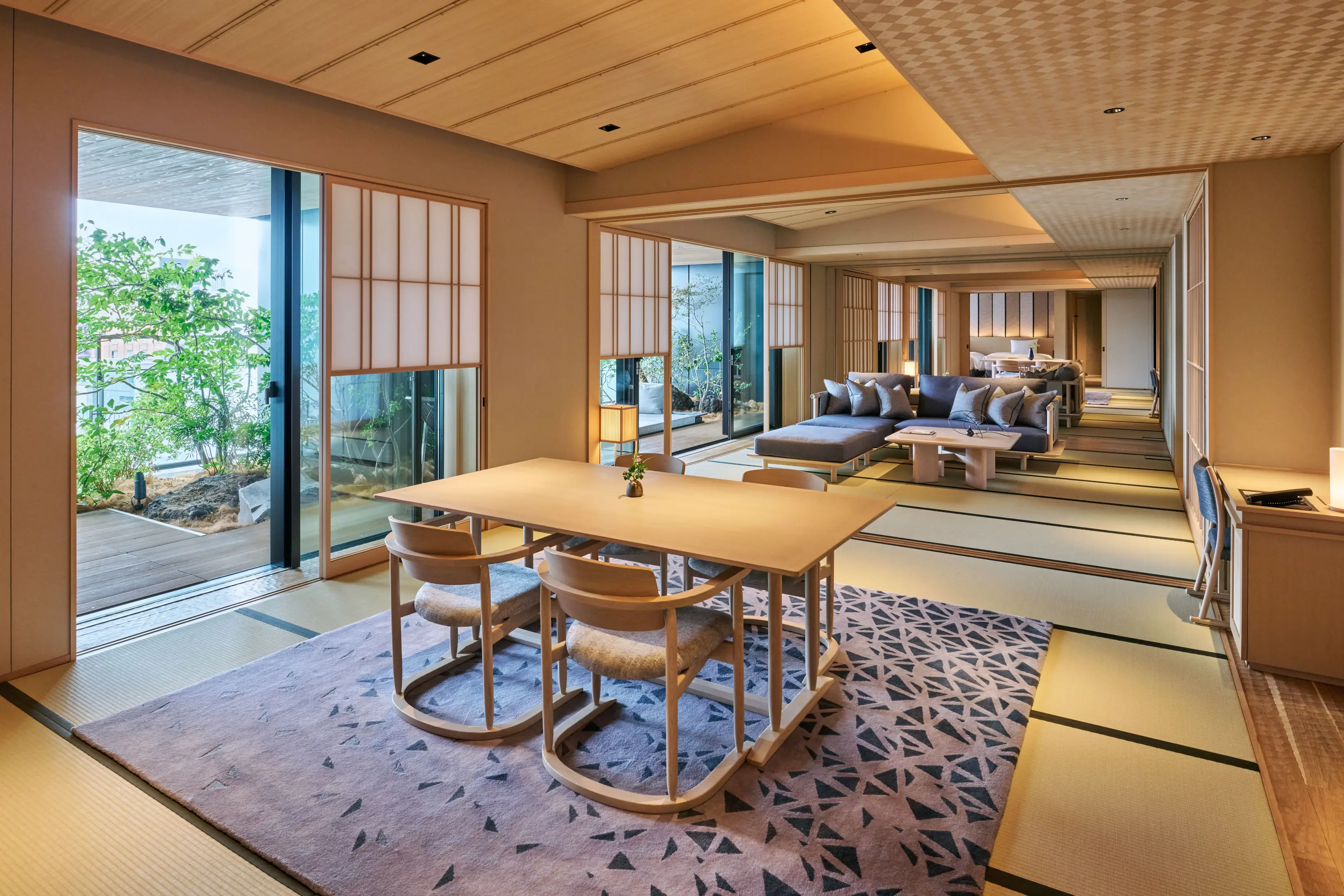
As early as the Edo period (1603-1867), hot spring water has occasionally been carried from Atami City in Shizuoka Prefecture, to central Tokyo for those who could not travel to it themselves; the shoguns had it brought to Edo Castle. FUFU Tokyo Ginza, which opened in November 2025, revives this idea for the present day. A delivery of natural hot spring water from Atami arrives each morning and fills a bath in all 34 rooms, fresh every day. The water is soft, and here, the retreat is delivered rather than traveled to.
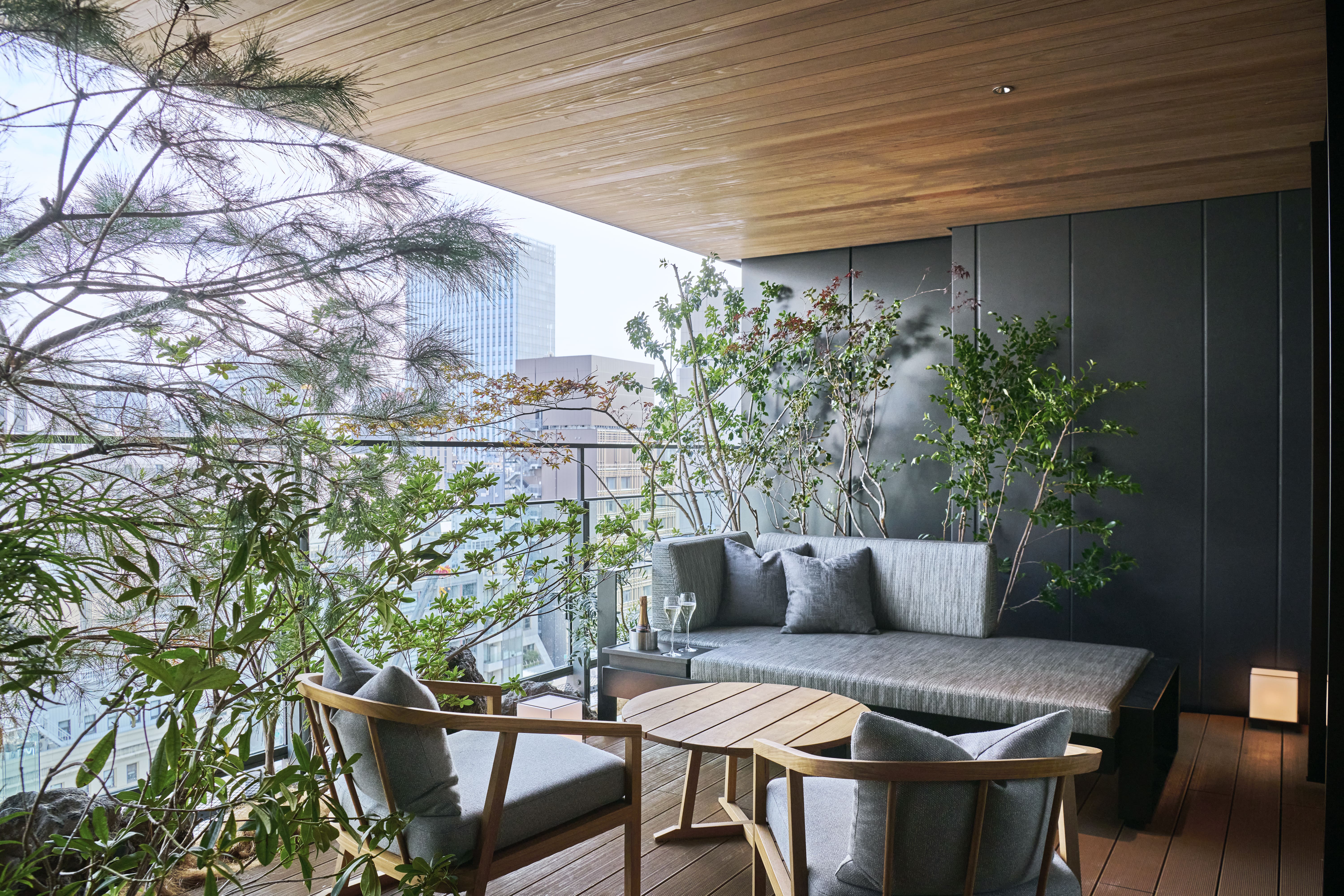
The hotel sits directly above Ginza-itchome Station, so a guest can arrive without stepping outside. Rooms occupy 5 floors, in 11 types, each with a garden of flowering trees, and no two are alike. Wood tones shift by floor, and every artwork was commissioned for this property alone. Yuzu and hinoki scents carry through the corridors, and yukimi-shoji (sliding paper screens whose lower panel lifts to frame the garden) in the rooms connect inside to out. The room, in other words, is the meticulously crafted destination.
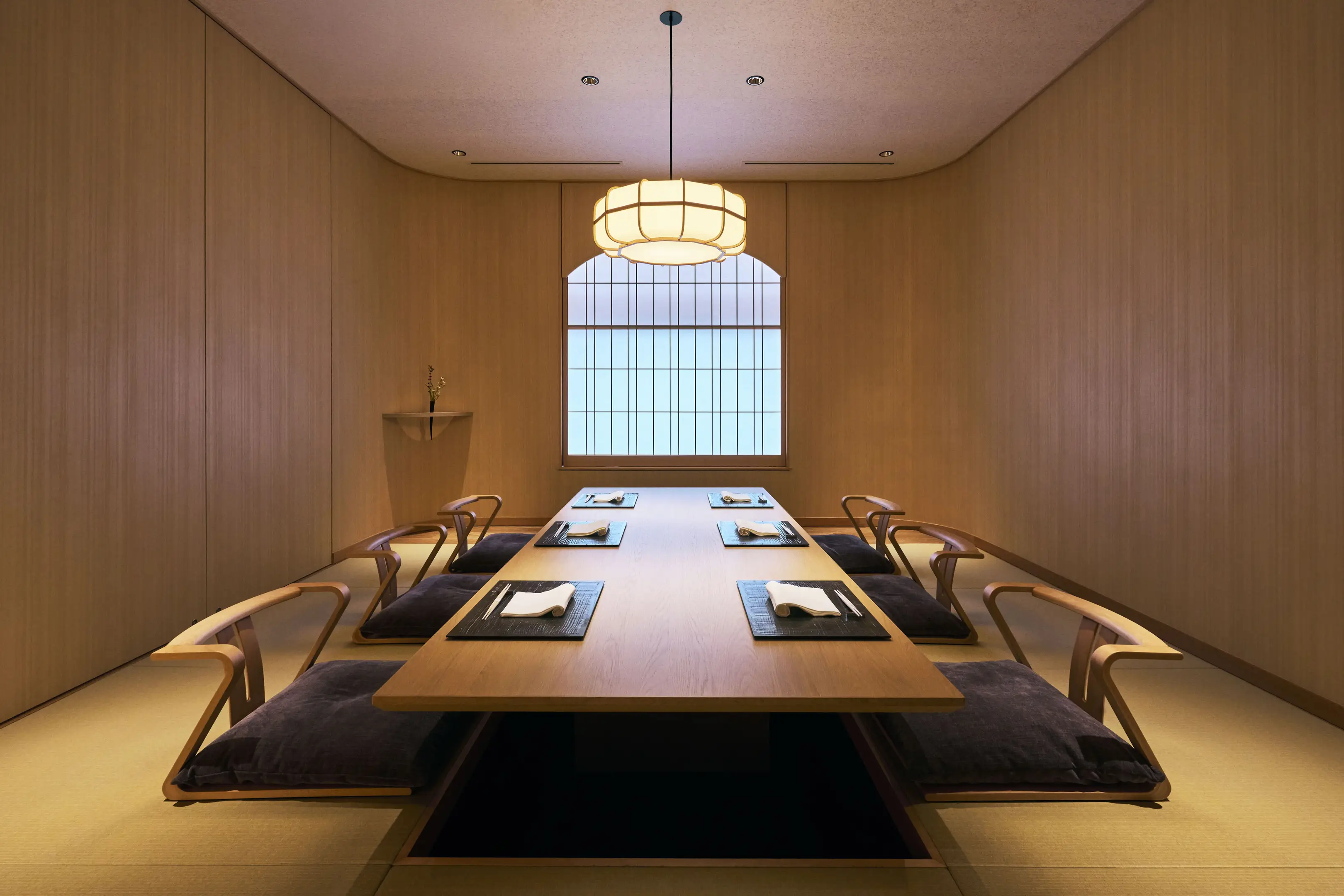
Privacy shapes the service too. Staff meet guests at street level and guide them up to the lobby for a private-booth check-in. Every room has a utility box, a hatch with a door on each side through which requests are exchanged at any hour without anyone entering. Guests can choose to dine at GINZA GAYU on the 12th floor, composed entirely of private rooms featuring bamboo craft art and Komatsu stone, once used in the stone walls of Edo Castle, or SUSHI GINGA in the basement, an intimate counter where the chefs explain each piece as they make it.
FUFU describes itself as a place where time is savored rather than spent, an idea that extends beyond the building itself. Ginza is the newest stop on a route that already runs through Atami, Hakone, Nikko, Nara, Kyoto, Karuizawa, and the shore of Lake Kawaguchi. Each property is built around the same unhurried logic in a different landscape. It is common for guests to move between them, embarking on a relaxing "Travel Relay" from one FUFU to the next.
At YUSORA, the rooftop lounge, a footbath filled with the same Atami water sits open to the sky, screened from the Ginza streets by greenery. Many guests arrive straight after check-in and stay as the afternoon turns to evening, feet in the warm water, watching the sky darken and the city light up around them. Here, the retreat begins not at the end of a journey out of Tokyo, but just above it.
KEYWORD
-
Meditation and a Monastic Breakfast at Tokyo’s Temple of the 47 Ronin
-

IMMERSE YOURSELF IN TOKYO'S KAWAII CULTURE
-

WHERE HISTORY LIVES ON: TOURING TOKYO'S HISTORIC ARCHITECTURE
-

ENTER A WORLD OF CALLIGRAPHY, WRAPPED IN SILENCE
-

THE PINNACLE OF TOKYO LUXURY AND THE MICHELIN "KEY" THAT UNLOCKS THE FUTURE
-
WELLNESS AROUND THE IMPERIAL PALACE